
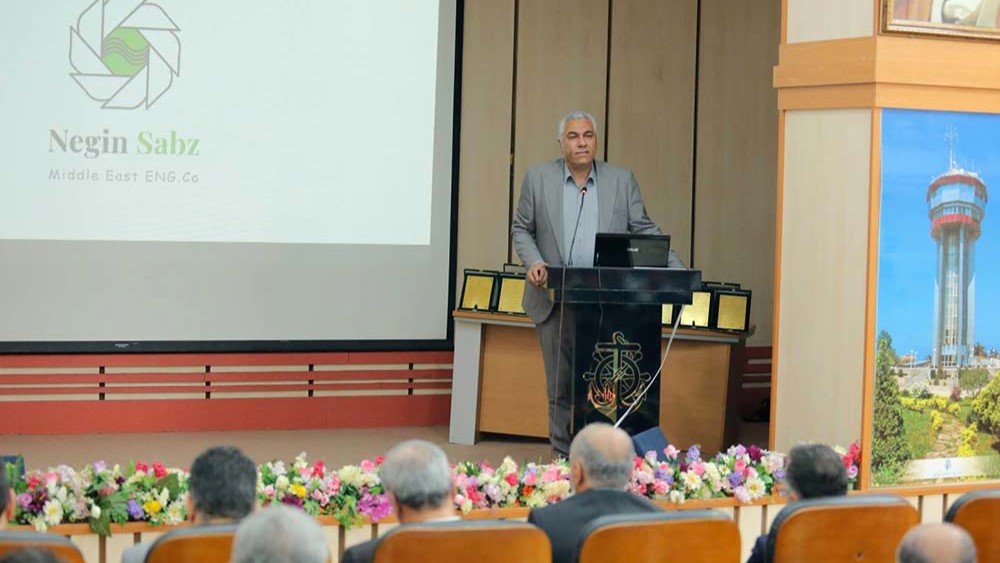
The Director General of Maritime Affairs of the Ports and Maritime Organization of Iran emphasized the necessity of developing national pilotage syllabi, scientific references, and specialized Persian-language resources for ship pilotage within the country.
Elmorad Afifipour, speaking at the First Annual Conference of Negin Sabz Ship Pilots, stated that more than 163 pilots are currently active within the Ports and Maritime Organization, highlighting the fundamental role of pilotage operations in the country’s maritime trade.
He added that while the organization employs approximately 6,000 personnel, a significant portion of maritime operations is carried out by these pilots, noting that “the key to the nation’s maritime trade is truly in the hands of ship pilots.
”Addressing the pilots, Afifipour stressed that safe and efficient access to ports is directly dependent on their performance and dedication. He explained that the overarching strategy of the Maritime Affairs Deputy is reflected in the contracts signed between the Ports and Maritime Organization and three pilotage companies operating in the southwest, southeast, and northern regions of the country. Accordingly, strict and precise implementation of contractual obligations is expected from both companies and pilots.
He further noted that all maritime and port authorities, as supervisory bodies, play a role in overseeing contract execution, with the organization acting as the overall regulator. The new contractual framework, he explained, encompasses technical, administrative, financial, legal, and operational components, all of which are subject to continuous monitoring by designated inspectors.
Afifipour emphasized that while operational aspects—particularly safe berthing and unberthing—are among the most sensitive components, effective pilotage relies on a chain of interconnected processes that must all be properly managed and executed.
Encouraging pilots to remain up to date, he highlighted the importance of leveraging modern technology and global maritime knowledge to continuously enhance professional competencies.
Reflecting on the significance of the event, Afifipour expressed satisfaction with the organization of the first annual pilots’ conference, stating that in over 30 years of service, beginning as a Trainee Third-Class Pilot, he could not recall a seminar where pilots, managers, and scientific presentations were all brought together, with papers subsequently published in book form.
He added that one of the most valuable outcomes of the conference is the foundation it has created for more structured, effective, and impactful future events, emphasizing that the recent gathering represents a noteworthy and commendable milestone deserving of continuity.Development of Specialized Persian Scientific Resources
Afifipour further expressed hope that such conferences would facilitate the domestic production of scientific and specialized knowledge required for maritime pilotage.
He stated that currently, standardized and documented Persian-language references in the field of maritime pilotage are largely unavailable. One of the key objectives of cooperation with pilotage companies, he noted, is to develop reliable, up-to-date, and well-documented educational materials to be used in training new pilots and improving overall operational performance.
Providing operational statistics, Afifipour noted that from the 163 active pilots, approximately 40,000 pilotage operations were conducted in the past year—81% in southern ports and 19% in northern ports, carried out by 32 pilots. He expressed hope that future political and economic developments would allow full utilization of the country’s port capacities.
He explained that based on these figures, each pilot conducted an average of 1.3 to 1.4 pilotage operations per day during the past year. While not a high volume, he emphasized that all 40,000 operations were completed with full safety, which he described as a significant achievement.
According to Afifipour, this outcome reflects the precision and commitment of pilotage companies, vessel masters, tug operators, jetty personnel, and all parties involved in the complex pilotage and vessel-handling process, whose contributions play a vital role in ensuring safe and timely operations.In closing, Afifipour expressed hope that the defined duties and responsibilities—whether through contractual frameworks or shared regulatory obligations—would further facilitate cooperation and streamline maritime operational processes.
He also extended his appreciation to the organizers of the First Annual Ship Pilots Conference in Anzali Port, as well as the management and staff of the Ports and Maritime Administration of Gilan Province, and emphasized the importance of continuing such conferences and benefiting from their outcomes throughout the year.
Free consultation and answers to all your questions...
Saturday to Wednesday 9am to 6pm... Thursday 9am to 2pm
Negin Sabz Middle East Marine Engineering and Services Company started its activity in 2004 and succeeded in carrying out more than 20 projects and gaining abundant and valuable experiences. Increasing capacities, the need to expand activities and assigned tasks caused this management to establish Negin Sabz Marine Engineering and Services Company with the investment of the Pension Fund of the Ports and Shipping Organization, as the most experienced dredging operator in the country and with the most equipped and modern dredging equipment in the country, with an eye on the future.